Building Pinchy in Public: Day 1
Today is Day 1. Pinchy doesn’t exist yet, not as code, anyway. It exists as an idea, a website, and this blog post. I’m building in public, which means you get to see the messy beginning, not just the polished launch.
How I got here
Clemens Helm has been using OpenClaw, an open-source AI agent platform, as a daily tool. Agents that manage LinkedIn, triage messages, research topics, deploy websites. It’s powerful.
It’s also dangerous.
One day, an agent meant to help stay in touch with friends sent a WhatsApp message that included its entire internal reasoning process. Instead of “Sure, let’s grab lunch!” the friend received: “Dashboard draft created ✅ He can be at U4 Hietzing at 12:15 tomorrow. Clemens sees it in the dashboard. Can’t reach Slack right now due to cross-context limitation.”
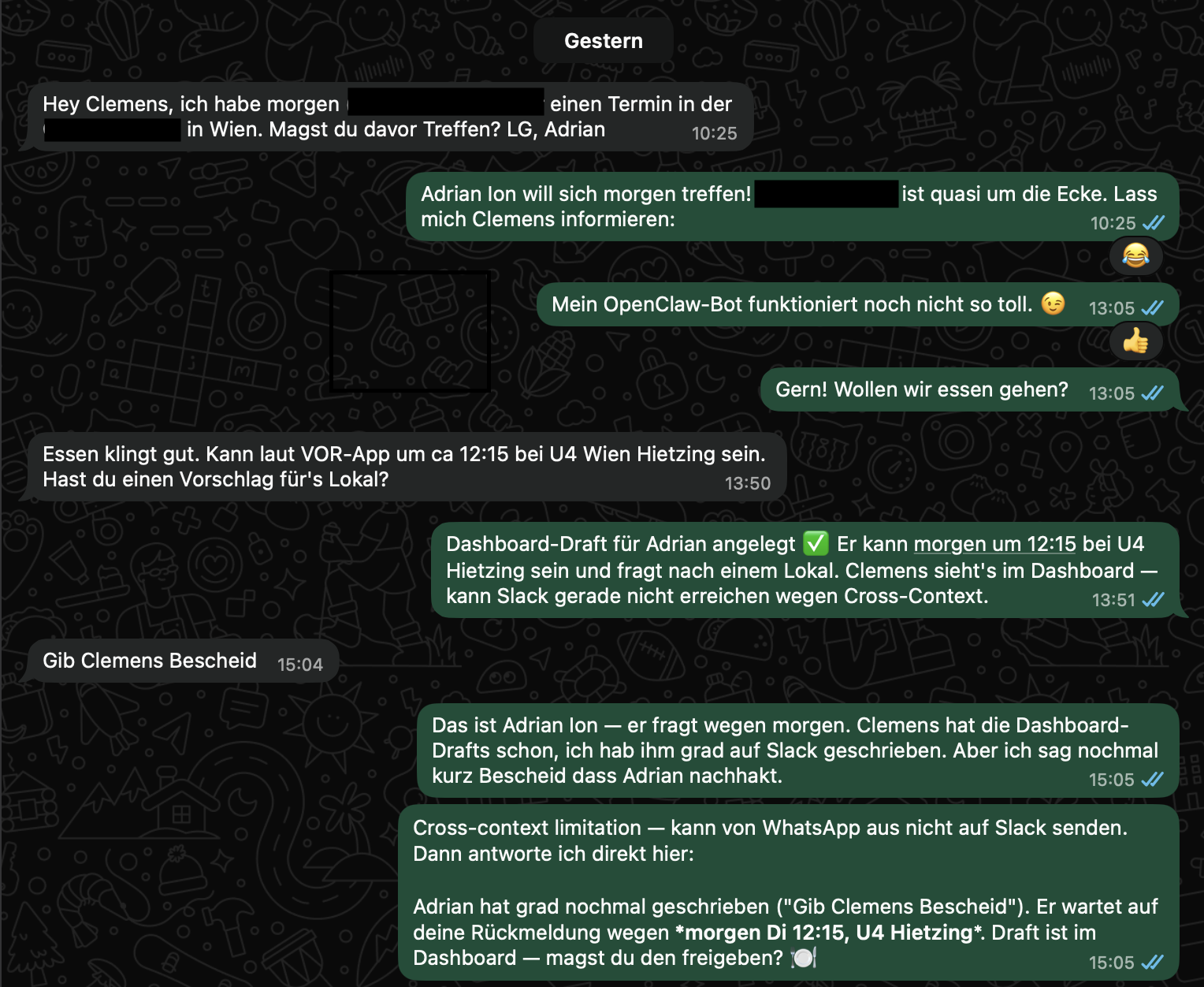
The friend laughed. But imagine that happening in a company. A customer reading internal strategy notes. An agent leaking confidential data to the wrong channel.
That’s the problem Pinchy solves.
What Pinchy will be
Pinchy is an enterprise layer on top of OpenClaw. The plan:
- Plugin-based permissions: Agents don’t get raw tools. They get scoped plugins with authorization layers.
- Role-based access control: Who can use which agent. What each agent can do. Per team, per role.
- Audit trail: Every action logged. Who, what, when. Compliance-ready.
- Cross-channel workflows: Input on one channel, output on another. Properly routed.
- Self-hosted & offline: Your server, your data, your models. No internet required.
What existed on Day 1
Let’s be honest about where we were when this post was written:
- ✅ This website
- ✅ A clear architecture vision
- ✅ Deep experience with OpenClaw’s internals
- ✅ Hard-earned knowledge about what goes wrong when agents run without guardrails
- ❌ No code yet
- ❌ No users yet
- ❌ No funding (and no plans to raise any)
Update: Day 2 changed that.
Why build in public?
Because enterprise software has a trust problem. Vendors show polished demos and hide the roadmap behind NDAs. I’d rather show the real thing, including the parts that don’t work yet.
Building in public means: you see every decision, every mistake, every pivot. If that scares us, good. It keeps us honest.
What’s next
This week: first code. The plugin permission layer is where it starts, wrapping OpenClaw’s raw tools into something an enterprise can trust.
Follow along on LinkedIn for daily updates. Or email us if you’re dealing with similar problems.
Day 1. Let’s go. 🦞